

Walk into any home improvement store or browse online, and you’ll be bombarded with thousands of ceiling fan options. Three blades or five? Wood or plastic? Smart control or pull chain?
It can be overwhelming. You might be asking yourself: "What is the actual best ceiling fan to get?"
Here is the honest answer: There is no single "best" fan for everyone. The best fan is the one that fits your specific room size, ceiling height, and lifestyle perfectly. A fan that works wonders in a high-ceilinged living room might be a disaster in a small bedroom.
To help you cut through the noise, we’ve put together this comprehensive guide. Here is exactly what you need to look for to find the perfect match for your home.
1. The Best Fan for Your Room Size (Size Matters!)
The most common mistake homeowners make is buying a fan that is too small or too big for the space.
Too small: You won't feel the breeze, and the fan will have to spin at max speed (creating noise) just to make a difference.
Too big: It can overpower the room visually and create a "wind tunnel" effect that is uncomfortable.
The Golden Rules for Sizing:
Small Rooms (up to 75 sq. ft): Look for fans 36 inches or smaller. Perfect for breakfast nooks or small home offices.
Standard Bedrooms (up to 175 sq. ft): The sweet spot is 42 to 48 inches.
Master Bedrooms & Living Rooms (up to 350 sq. ft): Go for 52 to 60 inches. This is the most popular standard size in the U.S.
Great Rooms & Open Concepts (over 350 sq. ft): You need a "Big Fan." Look for 60 inches to 72+ inches. These large blades move massive amounts of air slowly and quietly.
2. The Best Fan for Your Ceiling Height
Before you fall in love with a design, look up. How you mount the fan depends entirely on your ceiling height.
For Low Ceilings (< 8 ft): Get a "Flush Mount" or "Hugger" Fan.
These fans mount directly against the ceiling with no downrod. They are the best choice for safety and aesthetics in rooms with 8-foot ceilings, keeping the blades well above head height (7 feet clearance is the safety standard).-
For Standard & High Ceilings (> 9 ft): Get a Downrod Fan.
To get optimal airflow, the fan blades should hang about 8 to 9 feet from the floor.Standard ceilings: Use the short downrod usually included in the box.
High/Cathedral ceilings: You will need a longer extension rod to bring the fan down to the proper level.
3. The Best Motor: DC vs. AC (Why DC Wins)
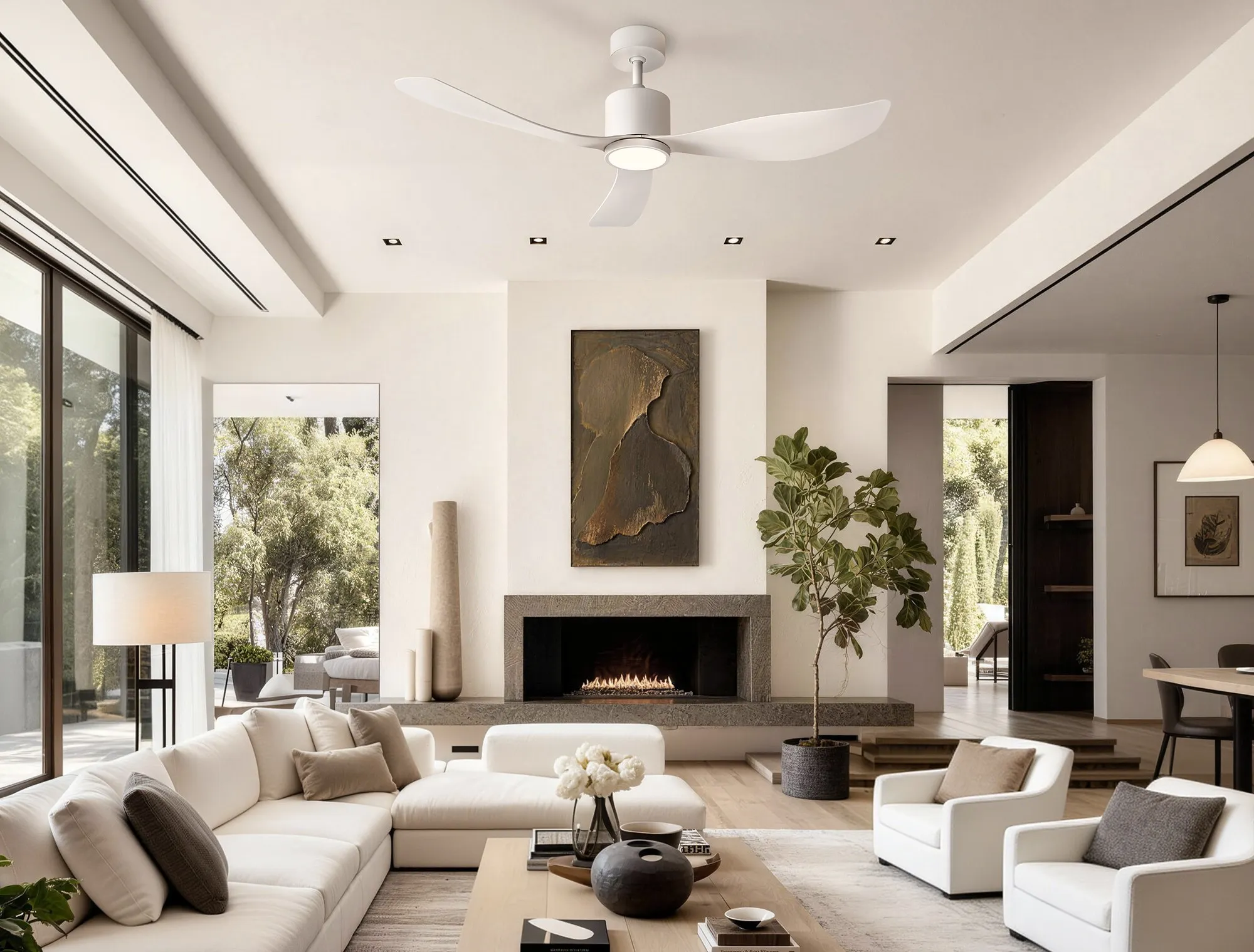
If you want the "best" technology available today, choose a DC (Direct Current) motor fan.
While traditional AC motor fans are cheaper, DC motor fans are superior in almost every way:
Whisper Quiet: They are virtually silent, making them the best type for bedrooms.
Energy Efficient: They use up to 70% less electricity than AC fans.
More Control: DC fans typically offer 6 speeds (vs. only 3 speeds on AC fans) and usually come with a specialized "Nature Mode" that simulates a natural breeze.
Lightweight: The motors are smaller and lighter, allowing for sleeker, more modern designs.
4. The Best Fan for Lighting Your Space
Does your room have recessed lighting (can lights), or will the fan be the only light source?
If the fan is the main light: Look for a fan with an integrated LED light kit. Modern LED fans allow you to change the "Color Temperature"—from Warm White (cozy for relaxing) to Cool White (bright for reading or working)—and are fully dimmable.
If you have plenty of other lights: You can choose a fan without a light for a cleaner, more minimalist look, or simply keep the light turned off.
5. The Best Control Option for Your Lifestyle
How do you want to turn your fan on?
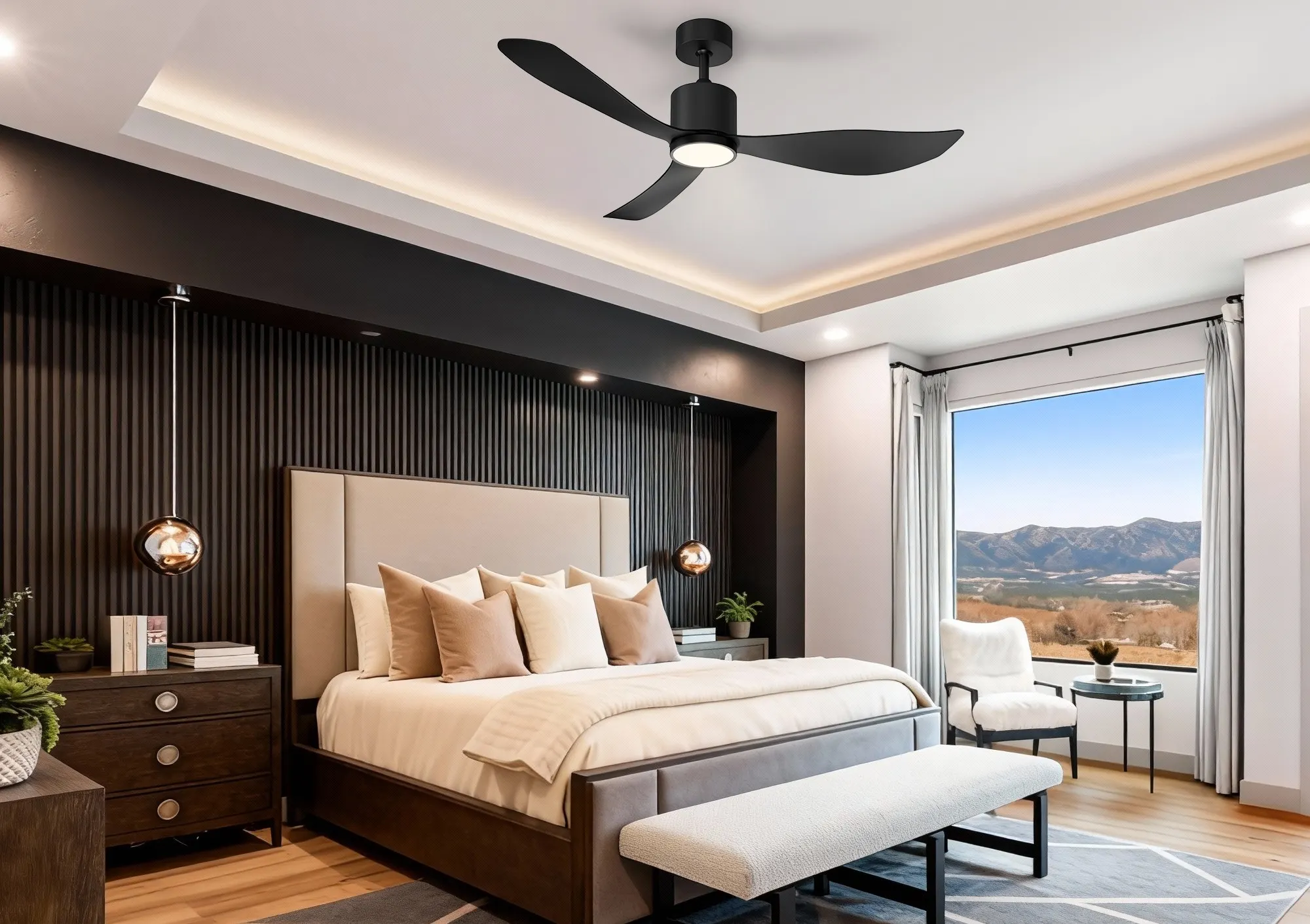
Remote Control: The standard "best" for convenience. Perfect for bedrooms so you don’t have to get out of bed to adjust the speed.
Wall Control: Great for families with kids (remotes often get lost!).
Smart Control: The ultimate upgrade. WiFi-enabled fans connect to apps, Alexa, or Google Assistant. You can set schedules, turn the fan on before you get home, or use voice commands.
6. A Myth Buster: Number of Blades
"Does a 5-blade fan move more air than a 3-blade fan?"
Actually, no.
In the past, fewer blades meant less air. But with modern engineering, a 3-blade fan can move just as much (or even more) air than a 5-blade fan.
3 Blades: Sleek, modern, and often moves air faster.
5 Blades: Traditional look, slightly steadier "wind."
The Verdict: Choose the number of blades based on the style you like. Don't worry about the airflow; check the CFM (Cubic Feet per Minute) rating instead.
Summary: So, What Should You Buy?
Here is our cheat sheet to help you decide:
Best for Sleeping: A 52-inch DC Motor fan with a remote control and whisper-quiet operation.
Best for Low Ceilings: A sleek Flush Mount fan with LED lighting.
Best for Large Living Rooms: A 60-inch+ fan with a high airflow rating.
Best for Tech Lovers: A Smart Fan that works with Alexa.
Ready to find the perfect fan for your home?
We have curated a collection of high-performance fans that check all these boxes. Whether you need a modern centerpiece or a silent bedroom companion, we have the best type for you.


Leave a comment
This site is protected by hCaptcha and the hCaptcha Privacy Policy and Terms of Service apply.