

Choosing the right faucet isn't just about picking a pretty piece of hardware; it's about finding the perfect partner for your vessel sink. The best choice marries function, form, and flawless engineering, creating a focal point that genuinely elevates your entire bathroom.
How to Choose Your Ideal Vessel Sink Faucet
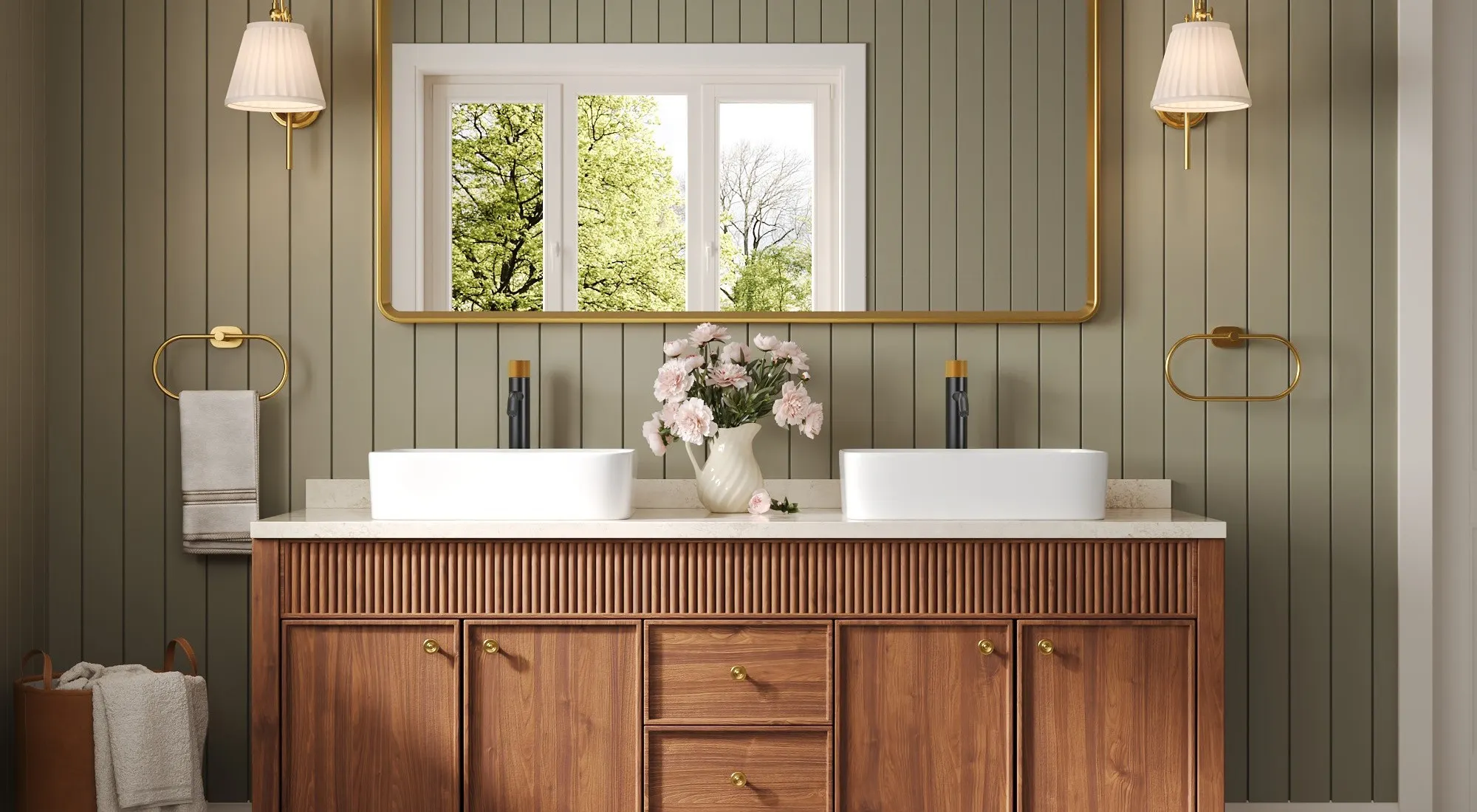
Unlike standard sinks that are dropped into a countertop, a vessel sink makes a statement by sitting on top of it. This dramatic, elevated design is precisely why you can't just use any old faucet. You need one specifically designed to clear the high rim of the basin and direct water exactly where it needs to go—without creating a splash zone on your counter.
Picking the right one is a game of inches and aesthetics. It's about finding a fixture that not only looks like it belongs with your sink and vanity but also feels right to use every single day.
The Three Pillars of a Perfect Faucet
To simplify your search, it helps to break down the decision into three key areas. Get these right, and you’re guaranteed to love the result.
-
Function and Ergonomics: This is all about the measurements—spout height and reach. These dimensions are non-negotiable. Get them wrong, and you'll be wiping up puddles and bumping your hands constantly.
-
Aesthetics and Durability: This is the fun part: the faucet's material and finish. A good finish doesn't just look great; it stands up to water spots, fingerprints, and years of cleaning.
-
Performance and Reliability: This covers the guts of the faucet, like the valve type. High-quality internal components are what keep it from dripping and ensure a smooth, steady flow of water for years to come.
Think of your faucet as a functional sculpture. It needs to be tall enough to clear the sink's edge comfortably and long enough to aim water toward the drain, not the rim. When you get it right, it looks like it was custom-made for the space.
This guide is designed to walk you through each of these critical factors, giving you the confidence to select one of the best vessel sink faucets on the market—a true investment in both style and performance.
Key Decision Factors for Vessel Sink Faucets at a Glance
To make things even simpler, here’s a quick-reference table that boils down the most important considerations.
| Factor | What to Consider | Impact on Your Bathroom |
|---|---|---|
| Spout Height & Reach | Is it tall enough to clear the sink rim? Does it direct water to the center? | Prevents splashing and ensures comfortable hand-washing. |
| Material & Finish | Does the finish (e.g., chrome, matte black) match your decor? Is the material (e.g., brass) durable? | Defines the style and dictates long-term durability and maintenance. |
| Mounting Type | Will it be a deck-mount (on the counter) or wall-mount faucet? | Affects installation complexity, counter space, and the overall aesthetic. |
| Valve Technology | Does it use a ceramic disc cartridge for drip-free performance? | Guarantees reliability and smooth handle operation over time. |
| Flow Rate | Is it WaterSense certified (1.2 GPM) for efficiency? | Saves water and reduces utility bills without sacrificing performance. |
This table serves as a great starting point, but we'll dive deeper into each of these elements to give you a complete picture.
Getting the Perfect Faucet Height and Spout Reach
Choosing a faucet for a vessel sink isn't just about style; it's a game of inches. The two most critical measurements you'll need to nail are spout height and spout reach. Get these right, and you'll have a bathroom that works as beautifully as it looks. Get them wrong, and you're in for a daily dose of splashes and frustration.
Think of it like a waterfall. If the water flows too close to the cliff, it just trickles down the rock face. If it projects too far out, it misses the plunge pool entirely. The goal is to have the water stream land dead center in your sink basin, right over the drain, for a perfect, splash-free flow.
Why These Dimensions Are So Critical
Because vessel sinks sit on top of the counter, your average bathroom faucet just won't cut it. They're too short, and their spouts don't extend far enough. This leads to two major headaches: not having enough room to comfortably wash your hands and water splashing everywhere but the sink.
When the faucet and sink are properly paired, you get plenty of clearance between the spout and the sink bowl. More importantly, the water hits the flat bottom of the basin instead of the angled sides, which is what really causes water to fly all over your countertop.
The Golden Rule for Vessel Faucets: The spout needs to clear the sink's rim by at least an inch, and the water stream should be aimed directly at the drain.
This simple rule is the key to creating a setup that not only looks professionally designed but is a joy to use every day.
How to Measure for the Ideal Spout Height
First up is spout height, which is the vertical distance from your countertop to where the water comes out of the spout. To figure this out, you first need to know how tall your sink is.
Here’s the simple, step-by-step formula:
- Measure Your Sink: Grab a tape measure and find the total height of your vessel sink, from the countertop it sits on to its top edge.
- Add Clearance: To that number, add a minimum of one inch. This is your hand-washing wiggle room. For a more comfortable experience, especially with deeper sinks, adding two to three inches is even better.
- Find Your Target Height: That final number is the minimum spout height you should be looking for in a faucet.
For example, if you have a six-inch tall vessel sink, you’ll want a faucet with a spout height of at least seven inches. This ensures the faucet arcs gracefully over the sink's edge, giving you all the space you need.
Nailing the Perfect Spout Reach
Just as crucial is the spout reach—the horizontal distance from the center of the faucet's base to the center of the spout's opening. If the reach is too short, water will hit the back of the sink. Too long, and it'll splash right over the front.
Follow these steps to get it just right:
- Locate the Faucet Hole: Pinpoint the exact spot on your countertop where the faucet will be installed.
- Find the Drain's Center: Measure the distance from the center of that faucet hole to the center of the sink's drain.
- Match That Measurement: The spout reach listed for your faucet should match this measurement as closely as possible.
This simple check guarantees the water lands exactly where it's supposed to: right down the drain. When you get both height and reach right, you create a perfect partnership between faucet and sink. It’s this attention to detail that elevates a bathroom from just "done" to truly exceptional.
Deck-Mounted Versus Wall-Mounted Faucets
Deciding between a deck-mounted and a wall-mounted faucet is one of those key moments in a bathroom project. This choice doesn’t just shape the final look; it has a real impact on the installation, the budget, and how you use the space every day. Each style brings something different to the table, so let's break down what makes them tick.
Think of it like this: a deck-mounted faucet is like a classic, grounded piece of furniture—sturdy and familiar. A wall-mounted faucet, on the other hand, is like floating shelving—sleek, modern, and space-saving. Both get the job done, but they create entirely different vibes.
No matter which style you lean toward, getting the measurements right is non-negotiable. This quick guide walks you through the key steps for a perfect fit.
As you can see, a great installation is a balancing act. The height, reach, and alignment all need to work in harmony to give you a comfortable, splash-free experience.
Deck Mounted vs. Wall Mounted Faucet Comparison
To help you visualize the trade-offs, here’s a side-by-side look at the two options. This should make it easier to see which style is the right fit for your specific project, budget, and design goals.
| Feature | Deck Mounted Faucet | Wall Mounted Faucet |
|---|---|---|
| Aesthetics | Classic, grounded, and traditional. Creates a substantial presence on the countertop. | Minimalist, clean, and modern. Frees up counter space for an open, airy feel. |
| Installation | Simpler and more common. Mounts through a hole in the countertop. Standard plumbing. | More complex. Requires opening the wall to install the valve and run water lines. |
| Best For | Bathroom updates, retrofits, and DIY projects. Ideal for preserving existing walls. | New construction or full remodels where walls are already open. |
| Counter Space | Requires space on the countertop behind the sink for the faucet base and handle. | Saves all counter space. The entire faucet is mounted on the wall, leaving the vanity top clear. |
| Cleaning | Can be tricky to clean around the base where water and grime can collect. | Extremely easy to clean. A quick wipe of the smooth countertop is all that's needed. |
| Cost | Generally lower installation costs due to the straightforward nature of the work. | Higher installation costs due to the need for in-wall plumbing and precise placement. |
Ultimately, the right choice comes down to balancing the look you want with the practical realities of your renovation.
The Appeal Of Deck-Mounted Faucets
Deck-mounted faucets are the go-to for a reason. They install directly onto the countertop, and for vessel sinks, you'll find "tall" or "vessel" specific models that have the extra height needed to comfortably clear the sink's edge.
Their biggest selling point is a straightforward installation. All the plumbing happens right under the counter, a familiar job for any plumber or a manageable task for a seasoned DIYer. This makes them a perfect pick for bathroom refreshes where you have no plans to start tearing into the walls.
The only real downside is that they take up a bit of countertop real estate. You have to leave enough room for the faucet's base, which can be a tight squeeze in smaller bathrooms or on narrow vanities where every inch counts.
The Modern Elegance Of Wall-Mounted Faucets
There’s no denying the clean, high-end look of a wall-mounted faucet. By lifting the hardware off the counter and onto the wall, you create an uncluttered, spacious feel that really lets your vessel sink be the star.
This setup is also a dream to keep clean. Forget trying to wipe around a clunky faucet base—you just have a smooth, clean surface from wall to sink. It's a signature look in minimalist and luxury bathroom designs.
The trade-off for that beautiful, clean look is a more complex installation. All the guts of the faucet—the valve and the water lines—have to be installed inside the wall. This takes careful planning to get the spout height and reach just right relative to where the sink will sit. For this reason, wall-mounted faucets are almost always reserved for new builds or major remodels where the walls are open anyway.
Making The Right Choice For Your Project
Your decision should really come down to your project's scope, your bathroom's layout, and your personal taste.
Go with a deck-mounted faucet if:
- You're doing a simple update without any major demolition.
- You have plenty of counter space to work with behind the sink.
- You prefer a standard installation that any plumber can handle with their eyes closed.
Choose a wall-mounted faucet if:
- You're starting from scratch with a new build or a full gut-and-remodel.
- A minimalist look and maximum counter space are your top priorities.
- You've budgeted for a more involved installation by a skilled professional.
At the end of the day, the best vessel sink faucets are the ones that perfectly match both your design vision and the practical constraints of your project. Weigh the aesthetics against the realities of the installation, and you'll make a choice you’ll love for years to come.
A Guide to Faucet Materials and Finishes
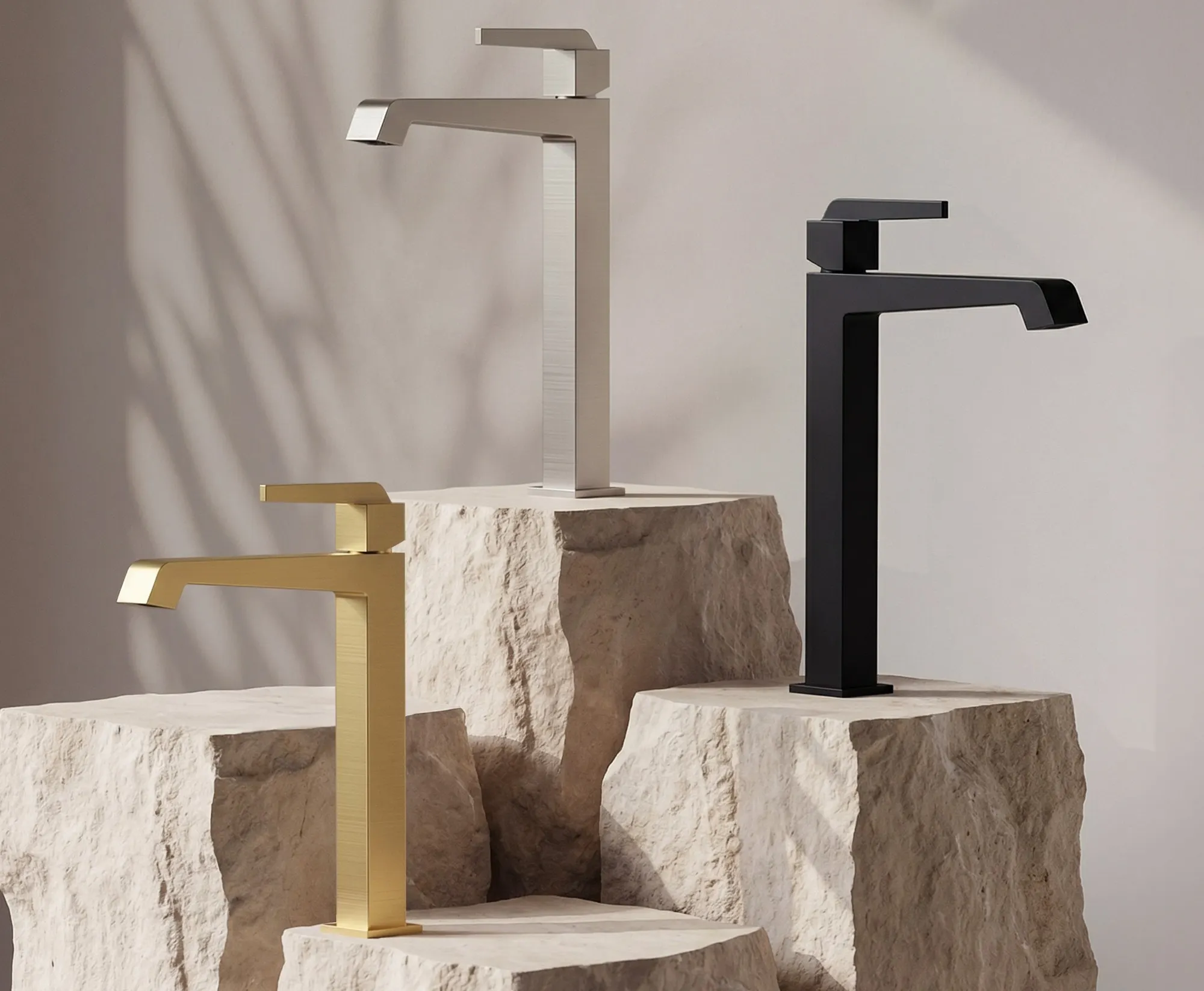
A faucet’s long-term appeal really comes down to what’s under the hood. While the finish is what catches your eye and defines the style, the core material is the true foundation of its durability. The best vessel sink faucets are built from materials that can handle the daily grind of a busy bathroom without skipping a beat.
Think of it this way: the core material is the faucet's skeleton, giving it strength and structure. The finish is the outfit it wears. A strong skeleton ensures the faucet will last for decades, while a quality outfit keeps it looking sharp through years of use.
This relationship between material and finish is everything. A gorgeous finish on a flimsy, cheap material will just peel or corrode in no time. On the flip side, a durable material with a poorly applied finish will tarnish and look dull. Real quality happens when both parts are executed perfectly.
The Best Core Materials for Faucets
When you look at what's inside a faucet, two materials consistently come out on top. They're the industry benchmarks for a reason. If you invest in a faucet made from one of these, you're getting a product that's truly built to last.
-
Solid Brass: This is the gold standard for high-quality plumbing, hands down. Brass, an alloy of copper and zinc, is incredibly tough and naturally resists corrosion and rust—perfect for the wet environment of a bathroom. It also handles high temperatures like a champ, promising reliable performance for years to come.
-
Stainless Steel: Known for its sleek, modern look and impressive strength, stainless steel is another excellent choice. The chromium in its composition creates a natural protective layer that fights off scratches, tarnish, and corrosion. This makes it a low-maintenance workhorse that stays beautiful with very little effort.
Key Takeaway: Always look for faucets with a solid brass or stainless steel body. These materials provide the muscle needed to support a beautiful finish and ensure your investment doesn't fall victim to the rust and internal corrosion that plague lesser-quality fixtures.
Popular Finishes and Their Design Styles
The finish is where your personality gets to shine. It's the first thing people notice and the critical element that ties your faucet into the rest of your bathroom's design. Here are some of the most popular options you'll find for vessel sink faucets.
Polished Chrome A timeless classic. Polished chrome has a bright, mirror-like shine that fits in just about anywhere, from ultra-traditional to starkly contemporary bathrooms. It’s famously durable and one of the easiest finishes to keep clean.
Brushed Nickel If you want a softer, more understated look, brushed nickel is a fantastic choice. Its warm, slightly textured surface is a lifesaver for hiding fingerprints and water spots, making it a super practical option for family bathrooms. It pairs beautifully with transitional and modern designs.
Matte Black Want to make a statement? This is how you do it. Matte black is the go-to for modern, industrial, or minimalist spaces, creating a stunning contrast against light-colored sinks and countertops. It’s a showstopper, but be prepared to wipe it down regularly to keep hard water spots at bay.
Brushed Gold For a touch of luxury that isn't too flashy, brushed gold delivers warm, sophisticated elegance. It’s a perfect match for glam, art deco, or high-end modern bathrooms. And just like brushed nickel, its textured surface helps conceal smudges, blending high style with practicality.
This push for premium finishes and thoughtful designs is part of a much bigger picture. The global faucet market was valued at USD 23.28 billion in 2024 and is expected to climb to USD 36.69 billion by 2030. This growth is largely fueled by homeowners demanding more stylish, modern, and eco-friendly fixtures.
Let's Talk Flow Rates and Water Conservation
In today's world, luxury is about more than just looks. It's about smart design that marries elegance with a sense of responsibility. When you're picking out a faucet for your vessel sink, one of the most important technical details to get a handle on is the flow rate. This single number tells you exactly how much water the faucet uses, which has a direct impact on both your utility bills and your home's environmental footprint.
Think of flow rate as the faucet's "thirst" for water. It's measured in GPM, or gallons per minute. A higher GPM simply means more water is rushing out of the spout every minute it's running.
What to Look For: GPM and WaterSense
The federal standard for bathroom faucets in the U.S. caps the flow rate at 2.2 GPM. But if you want to be smarter about your water use, the real gold standard is the WaterSense label. This is a program run by the U.S. Environmental Protection Agency (EPA) to certify water-efficient products.
Faucets that earn the WaterSense badge have a flow rate of 1.5 GPM or less, which is a big drop from the standard. You'll even find some ultra-efficient models that go as low as 1.2 GPM. Choosing a WaterSense-certified faucet gives you peace of mind, knowing it’s been tested to meet strict standards for both efficiency and performance.
It's a common myth that a lower flow rate automatically means a weak, trickling stream of water. That couldn't be further from the truth with today's technology. A well-designed aerator makes all the difference.
This move toward eco-friendly fixtures isn't just a passing fad; it's a huge force in the home design industry. The global faucet market, valued at around USD 25.32 billion in 2025, is expected to balloon to USD 51.17 billion by 2034. That explosive growth shows just how much people want fixtures that are both beautiful and sustainable.
How Aerators Work Their Magic
So how do the best vessel sink faucets give you a satisfying, powerful stream while using less water? The secret is a tiny, unsung hero called the aerator. It's that little mesh screen you see at the very tip of the faucet spout.
An aerator's job is to mix air into the water as it passes through. This creates thousands of tiny, aerated bubbles that bulk up the water stream, making it feel fuller and more powerful than it actually is. It's a brilliant piece of simple engineering that makes a 1.2 GPM flow feel just as strong as an old, water-guzzling 2.2 GPM faucet.
- Shapes the stream: It creates a neat, splash-free column of water.
- Saves water: It cuts down on the amount of water you use without you feeling the difference.
- Boosts perceived pressure: The air makes the water feel softer and more substantial against your hands.
The Payoff: Long-Term Savings
Choosing a water-efficient faucet isn't an expense; it's an investment that pays you back. While you might spend a little more upfront for a quality, certified model, the savings on your water bill start adding up immediately.
And it doesn't stop there. By using less hot water, you’re also cutting down on the energy your water heater consumes. That means you save on both your water and energy bills. A beautiful, efficient vessel sink faucet is truly one of the smartest, most impactful upgrades you can make to your bathroom. It’s proof that great style and responsible living can go hand in hand.
A Guide to Installation and Maintenance
Getting your new faucet is just the first step. To make sure it works perfectly and keeps looking great for years, you need to get the installation right and stick to a simple maintenance routine. Think of it like a new car—the initial setup and regular care are what keep it running smoothly and looking sharp.
A sloppy installation can cause all sorts of headaches, from annoying drips to a wobbly faucet that just feels cheap. On the other hand, a solid, professional installation sets the stage for years of trouble-free use.
Getting the Installation Right
The path you take here really depends on whether you chose a deck-mounted or a wall-mounted faucet. One is a pretty manageable weekend project for a handy homeowner, while the other is a job best left to the pros to avoid some potentially expensive water damage.
For Deck-Mounted Faucets
This is the more straightforward option by far. You’ll be feeding the faucet and its supply lines through the hole in your countertop, tightening it down from below, and then hooking up the water.
- Get Your Tools Ready: You'll probably need an adjustable wrench, a basin wrench (a real lifesaver for tight spaces), some plumber’s putty or silicone sealant, and a bucket to catch any drips.
- Read the Manual: Always follow the manufacturer's instructions to the letter. Every model has its own little quirks.
- Leak Check Everything: Once you've got it all connected, turn the water on slowly. Then, carefully inspect every single connection point for even the tiniest bead of water.
It's always better to take your time and do it right once than to rush and have to fix a leak later. Double-checking your work as you go will save you from a world of frustration.
For Wall-Mounted Faucets
Because this job involves plumbing inside your walls, hiring a professional plumber is strongly recommended. They'll need to install a valve and run new water lines, all while making sure the faucet spout is at the exact right height and depth for your sink. This all has to happen before the drywall and tile go up, so the stakes are high.
Keeping Your Faucet's Finish Flawless
With your faucet beautifully installed, a little bit of regular care is all it takes to keep it looking brand new. The main enemies are mineral deposits from hard water and soap scum, which can slowly dull and damage the finish.
For common finishes like chrome, brushed nickel, or matte black, the cleaning routine is simple and gentle.
- Wipe It Down Daily: The single best thing you can do is wipe the faucet with a soft, dry microfiber cloth after you use it. This simple habit prevents water spots from ever forming.
- Clean It Weekly: For a slightly deeper clean, a bit of mild soap and warm water on a soft cloth is all you need. Rinse it well and buff it dry.
- Stay Away from Harsh Chemicals: This is crucial. Never use abrasive cleaners, scrub pads, bleach, or ammonia. They will strip the protective coating right off your faucet's finish, causing permanent discoloration and corrosion.
By following these simple tips, you can be confident that your choice of one of the best vessel sink faucets will remain a stunning and functional centerpiece in your bathroom for a long, long time.
Got Questions About Vessel Sink Faucets? We've Got Answers.
Let's tackle some of the most common questions that pop up when people are choosing a vessel sink faucet. Getting these details right is the key to a bathroom you'll love using every day, so we'll clear up any lingering doubts you might have.
Think of this as the final checklist before you make your decision.
Can I Just Use a Regular Faucet with a Vessel Sink?
In a word, no. A standard bathroom faucet is simply too short for a vessel sink. Since the sink sits on top of the counter, you need a much taller faucet to get the spout up and over the rim.
If you tried to use a standard faucet, you'd have virtually no space to even get your hands under the water. That's why you'll see faucets specifically labeled as "vessel" or "tall" models. A wall-mounted faucet is another great solution, as it comes out from the wall above the sink, sidestepping the height issue entirely.
Are Vessel Sink Faucets Prone to Splashing?
This is a huge concern for many, but the truth is, the faucet isn't the real culprit. Splashing is almost always the result of a bad match between the sink and the faucet. When the faucet height and spout reach are correctly calculated, the water flows straight down towards the drain, keeping splashing to a minimum.
Splashing happens when the water stream hits the curved sides of the sink bowl instead of the flat bottom near the drain. Proper measurement and alignment are the keys to a splash-free setup.
To get it right, make sure the faucet's spout is at least an inch above the sink's rim. More importantly, check that the spout's reach directs the water to land right over the drain opening. This little bit of planning is what separates a frustrating setup from one of the best vessel sink faucets for your bathroom.
How Do I Clean Around the Base of the Faucet?
It's true that the spot where a deck-mounted faucet meets the countertop can be a magnet for water spots and soap scum. It can be a bit awkward to clean, but it's definitely manageable with a few good habits.
Here's how to keep that area looking pristine:
- Daily Wipe-Down: Keep a soft microfiber cloth handy and give the counter and faucet base a quick wipe after you use the sink. This simple step prevents mineral deposits from ever building up.
- Bring in a Soft Brush: For a deeper clean, an old soft-bristled toothbrush works wonders. It can get right into the crevice between the faucet and the counter without scratching anything.
- Seal It Up: When the faucet is installed, a thin, clear bead of high-quality silicone sealant around the base creates a watertight barrier. This stops grime from ever working its way underneath.
Of course, if you want to avoid this issue altogether, a wall-mounted faucet is your answer. It leaves your countertop completely clear and incredibly easy to clean.
At GRANDJOY, we focus on creating top-tier fixtures that blend beautiful design with certified, reliable performance. Our vessel sink faucets are specifically engineered to deliver that perfect combination of height, reach, and style your bathroom deserves. Take a look at our collection to find the ideal faucet to bring your vision to life. Discover your perfect vessel sink faucet at GRANDJOY.


Leave a comment
This site is protected by hCaptcha and the hCaptcha Privacy Policy and Terms of Service apply.