
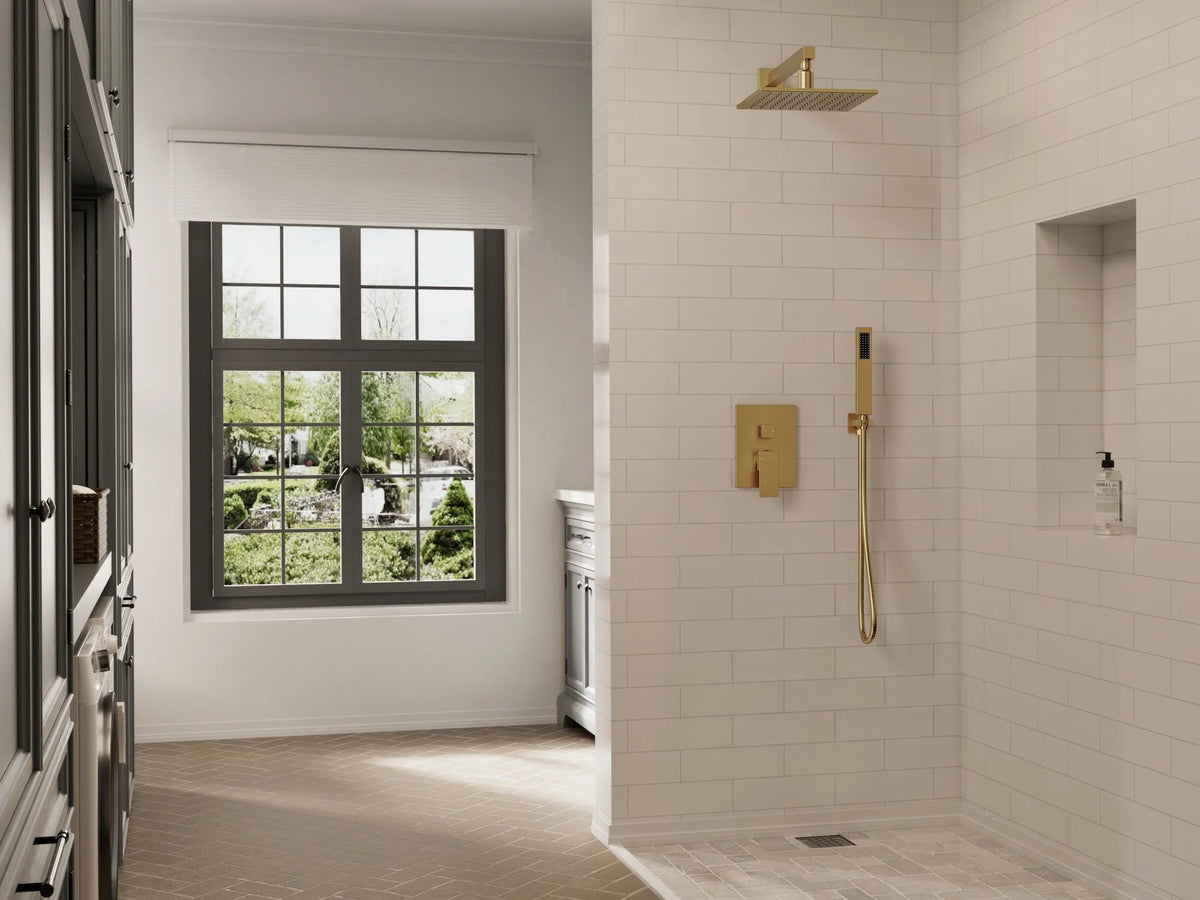
A thermostatic shower system is a shower valve and outlet system that automatically mixes hot and cold water to maintain a selected outlet temperature. It senses changes in water temperature and adjusts the hot and cold flow to keep the shower stable when another fixture uses water or supply conditions change.
Thermostatic control is a method of temperature regulation. It does not replace the home’s water heater, increase the available water pressure, or guarantee unlimited flow. The system can maintain a stable temperature only when the supply pressure, flow rate, valve sizing, and shower outlets are within the manufacturer’s requirements.
What a Thermostatic Shower System Includes
A typical concealed thermostatic shower system includes:
- A rough-in valve body installed behind the wall.
- A thermostatic cartridge or temperature-sensitive element.
- Hot and cold inlets.
- One or more mixed-water outlets.
- A maximum-temperature limit stop.
- A compatible trim, handle, and faceplate.
- Fixed showerheads, hand showers, body sprays, or a combination of outlets.
An exposed thermostatic system keeps more of the valve and piping visible. A concealed system hides the rough-in valve behind the finished wall. Both use a temperature-control mechanism, but the installation and service access differ.
How Thermostatic Temperature Control Works
Most thermostatic cartridges use a wax capsule or a similar temperature-sensitive element.
- Hot and cold water enter the valve.
- The element senses the temperature of the mixed water.
- When the water becomes too hot, the element expands and reduces hot-water flow.
- When the water becomes too cool, the element contracts and allows more hot water into the mix.
- The cartridge continues making small adjustments to maintain the setpoint.
The user sets the desired temperature with the control. During installation, the maximum-temperature limit stop is adjusted and verified so the handle cannot normally be turned beyond the selected high-temperature limit.
Thermostatic vs Pressure-Balancing vs Manual
Manual shower mixer
A manual mixer relies on the user to balance hot and cold water. It does not automatically compensate for pressure or temperature changes. A flush, appliance use, or pressure fluctuation can cause a noticeable temperature swing.
Pressure-balancing valve
A pressure-balancing valve responds mainly to changes in hot and cold pressure. If cold-water pressure drops, the valve limits hot-water flow to reduce the risk of a sudden temperature spike.
Thermostatic valve
A thermostatic valve senses mixed-water temperature directly. It adjusts the hot and cold proportions to maintain a more precise outlet temperature and commonly includes an adjustable maximum-temperature limit.
Pressure-balancing control is often sufficient for basic thermal-shock protection. Thermostatic control is generally stronger when precise setpoint stability and a verified maximum temperature are important.
Key Benefits of a Thermostatic Shower System
More stable shower temperature
The system responds to temperature changes while the shower is running. This can reduce the need to adjust the handle whenever another fixture is used.
Anti-scald protection
The maximum-temperature limit stop helps prevent the user from selecting a temperature above the configured limit. This does not remove the need for safe water-heater settings, code compliance, and correct installation.
Better comfort
A stable temperature is especially useful for family bathrooms, multi-outlet showers, and households with children or older adults.
Potentially less water waste
When the preferred temperature is reached and maintained, users may spend less time adjusting the handle or waiting for stable water. Actual savings depend on household habits, system design, and supply conditions.
What Thermostatic Control Does Not Solve
A thermostatic shower system does not automatically fix:
- Low water pressure caused by the home’s supply.
- Undersized supply lines.
- A clogged showerhead or inlet filter.
- A failed cold-water supply.
- Incorrect valve sizing.
- Incompatible trim or cartridges.
- Poor installation or missing commissioning.
Check the minimum and maximum operating pressure, required flow rate, outlet demand, and wall depth before selecting a system.
Temperature Limit Stop and Commissioning
The maximum-temperature limit stop is a critical safety feature. During commissioning:
- Set the water heater and system to normal operating conditions.
- Run the shower at the intended flow.
- Measure the outlet temperature with a thermometer.
- Adjust the limit stop according to the manufacturer and local code.
- Secure the setting and verify it again.
- Record the final temperature and installation details.
A thermostatic cartridge does not self-commission. A correctly manufactured valve can still perform incorrectly if the limit stop is not adjusted or the system is installed with reversed supplies.
Installation and Compatibility Checks
Thermostatic shower systems usually involve concealed plumbing, so planning must happen before the wall is closed and tiled.
Confirm:
- Minimum and maximum supply pressure.
- Hot and cold inlet orientation.
- Required flow rate and total outlet demand.
- Wall depth and service access.
- Rough-in valve and trim compatibility.
- Number and location of shower outlets.
- Thermostatic cartridge access for future service.
- Local plumbing-code and inspection requirements.
Professional installation is normally recommended because the work includes in-wall plumbing, temperature-limit adjustment, leak testing, and safety verification.
Maintenance
A thermostatic system needs modest but regular maintenance.
- Check outlet temperature periodically.
- Clean inlet screens or filters according to the manufacturer.
- Descale the showerhead and hand shower without damaging the finish.
- Exercise rarely used controls from cold to hot and back.
- Recalibrate the temperature setting only as directed by the manual.
- Replace the cartridge if temperature becomes unstable or cannot be adjusted correctly.
Use mild, finish-compatible cleaners. Avoid abrasive pads and harsh chemicals that can damage the trim or seals.
Frequently Asked Questions
Is a thermostatic shower system the same as a thermostatic mixing valve?
A thermostatic mixing valve describes the temperature-mixing function. A thermostatic shower system is a complete shower application that may include the rough-in valve, cartridge, trim, controls, showerheads, and additional outlets.
Does a thermostatic shower work with low water pressure?
Only when the available pressure and flow meet the system’s specifications. Some models are designed for lower-pressure systems, while others require a minimum pressure or a booster pump. Check the product data before buying.
Can I install a thermostatic shower system in an existing bathroom?
Often, but the existing valve normally needs to be replaced inside the wall. This may require opening and refinishing the wall or tile. Pipe spacing, wall depth, trim compatibility, and local code must be checked first.
Does thermostatic control eliminate the risk of scalding?
No system removes every risk. A correctly installed thermostatic valve with a verified maximum-temperature limit reduces risk when water-heater settings, plumbing conditions, and local requirements are also managed correctly.
How often does the thermostatic cartridge need replacement?
Cartridge life depends on water quality, usage, model quality, and maintenance. Replace it when temperature no longer holds, adjustment becomes difficult, or the manufacturer’s service instructions require it.
Final Takeaway
A thermostatic shower system maintains temperature by sensing the mixed water and adjusting the hot and cold flow. It provides more precise control than a manual mixer and commonly includes a maximum-temperature limit for anti-scald protection.
Choose a system that matches the home’s pressure, flow, wall depth, outlets, and code requirements. Have the valve installed and commissioned correctly, verify the maximum outlet temperature, and maintain access for future service.
Explore GRANDJOY Shower Systems for compatible thermostatic and shower-system configurations.


Leave a comment
This site is protected by hCaptcha and the hCaptcha Privacy Policy and Terms of Service apply.