

Walk into a modern, design-forward bathroom, and you’ll likely spot a vessel sink. Instead of being dropped into the countertop like a typical sink, a vessel sink is a freestanding bowl that sits right on top of the vanity.
This simple shift in placement turns a basic utility into a stunning piece of functional art. It immediately becomes a focal point, making a powerful statement in any bathroom design.
So, What Exactly Is a Vessel Sink?
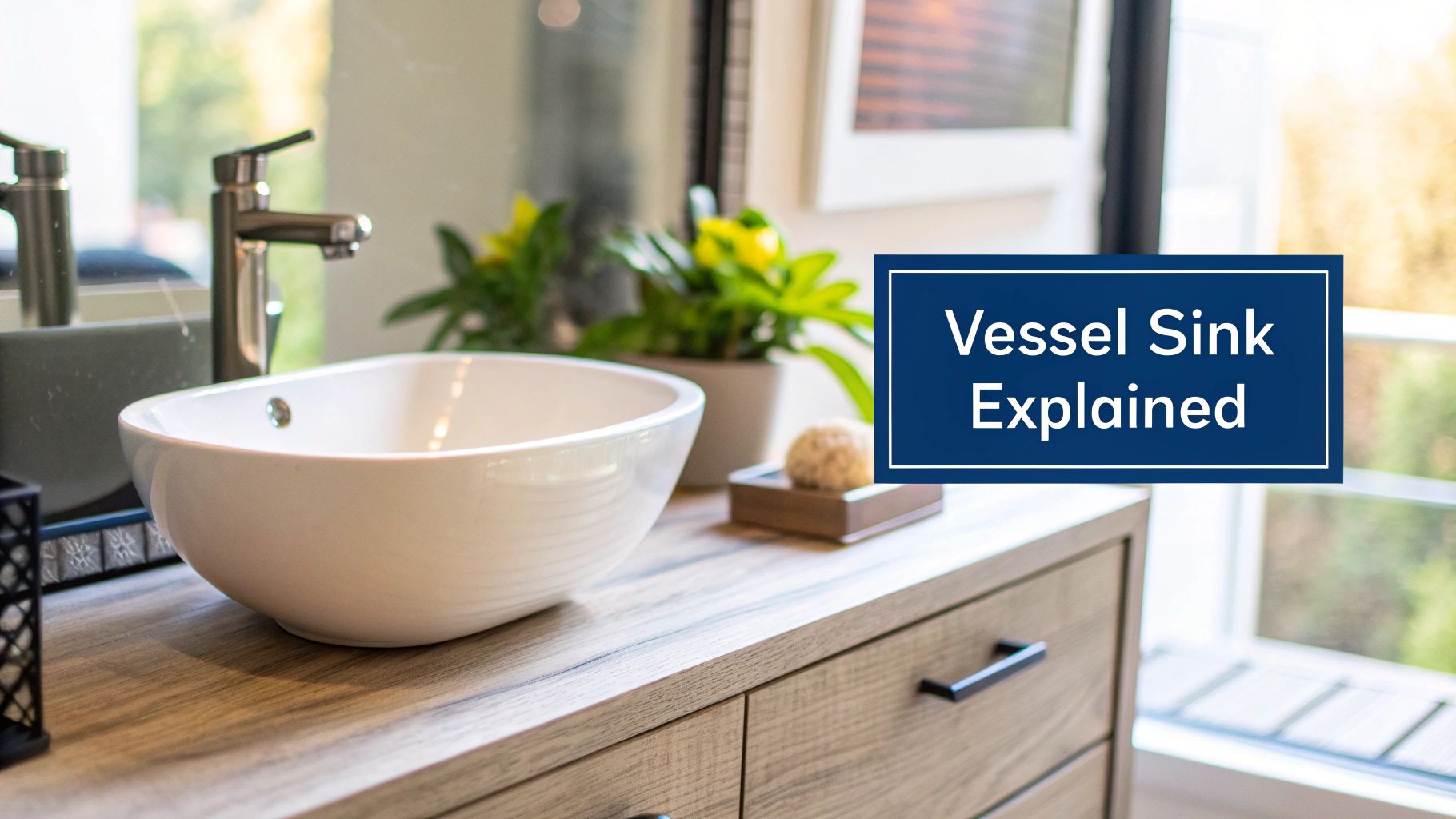
Think about the difference this way: a traditional sink is built into the landscape of your countertop. A vessel sink, on the other hand, is like a beautiful sculpture placed on top of it. It’s this fundamental distinction that gives the vessel sink its unique character and visual weight, instantly drawing your eye.
For a quick overview, here's a simple breakdown of what defines a vessel sink.
Vessel Sink at a Glance
| Characteristic | Description |
|---|---|
| Mounting Style | Sits on top of the vanity or countertop, rather than being recessed or undermounted. |
| Appearance | A freestanding bowl or basin; often serves as a decorative centerpiece. |
| Installation | Requires a hole in the countertop only for the drain; faucet is typically mounted separately. |
| Faucet Type | Needs a taller, specialized vessel faucet or a wall-mounted faucet to clear the height of the bowl. |
| Material Variety | Available in a vast range of materials, including ceramic, glass, stone, wood, and metal. |
This design is a go-to for designers and homeowners looking to create a custom, spa-like atmosphere. Since the entire basin is visible, it puts the material—whether it's gleaming porcelain, earthy stone, or sleek glass—on full display in a way that integrated sinks just can't.
A Modern Design Statement
The rise of the vessel sink isn't just a fleeting trend. It reflects a bigger shift toward personalized, design-conscious bathroom spaces. Once a niche choice, they are now a mainstream option for both high-end renovations and everyday new builds.
The numbers back this up. Fueled by a boom in home renovation projects, demand for vessel sinks continues to rise, transforming them from a niche choice into a mainstream option in the global bathroom fixture market, proving just how much staying power these fixtures have.
The real magic of a vessel sink is its ability to merge form and function seamlessly. It flips the script on what a sink should be, elevating it from a simple basin to a piece of decor. This opens up a world of creative expression in bathroom design.
In the end, choosing a vessel sink is about making a conscious style choice. It’s a clear move away from the standard, giving you a fantastic opportunity to inject personality and architectural flair into one of the most functional rooms in the house.
Exploring the World of Vessel Sink Materials
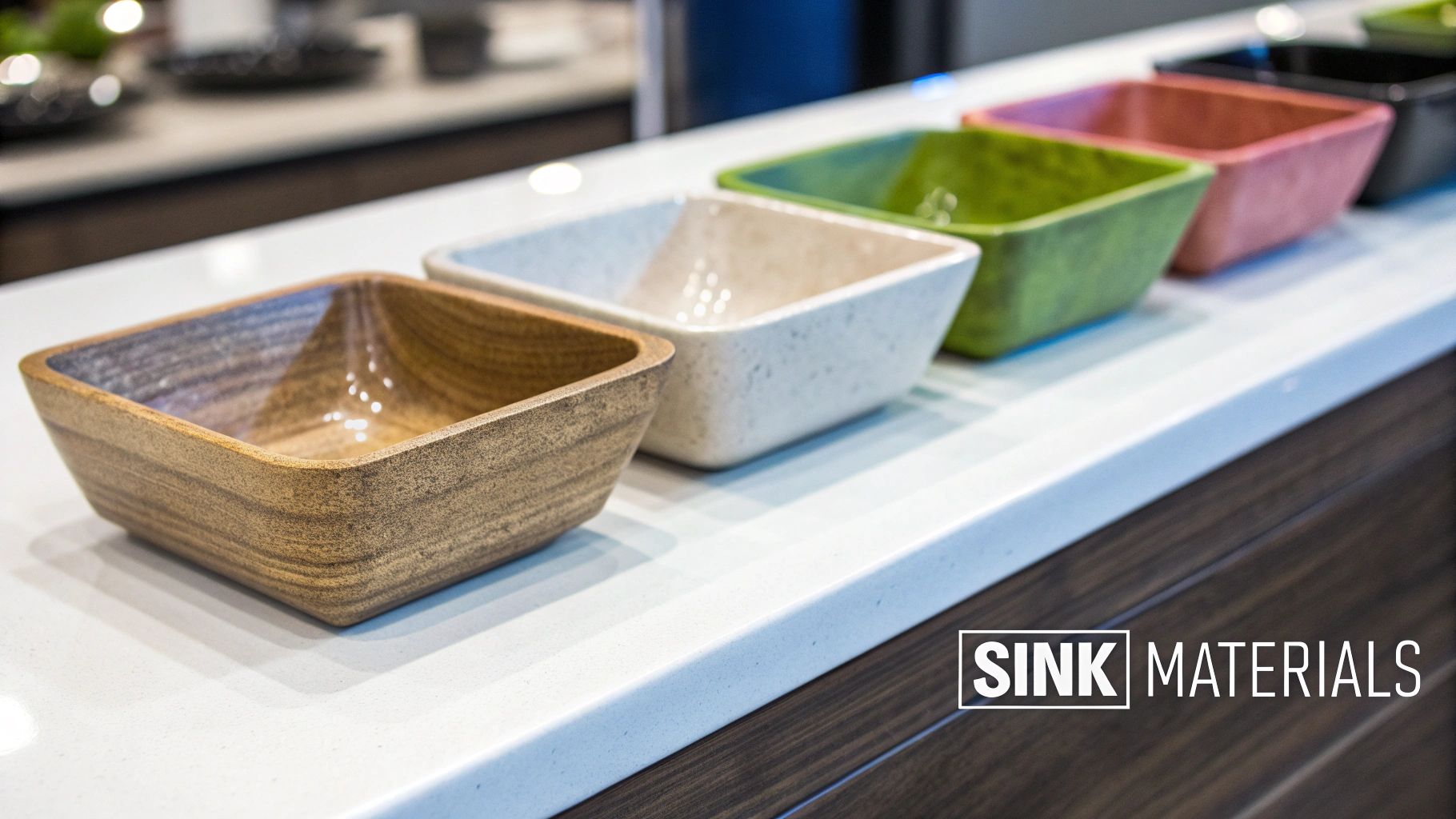
Choosing a vessel sink isn’t just about picking out a fixture; it's about selecting a centerpiece for your bathroom. The material you land on tells a story, setting the entire tone for the space and influencing everything from daily maintenance to how it holds up over the years.
Let's move beyond a simple list and really dig into the personality and practicality behind the most popular options out there. Each one offers a unique blend of looks, upkeep requirements, and durability, which is a big reason why vessel sinks have become such a force in modern bathroom design.
This shift toward statement fixtures is clearly reflected in market trends. Vessel sinks account for a substantial share of the global bathroom sink market, driven by consumer demand for high-quality, design-forward fixtures. An increasing number of buyers prioritize durable materials that meet strict safety standards when making their selections.
Timeless and Trusted Materials
For a busy family bathroom or a space with classic style, some materials have proven their worth time and time again. They deliver that perfect balance of elegance and endurance.
- Ceramic and Porcelain: Think of these as the reliable workhorses of the sink world. Fired at incredibly high temperatures, they're non-porous, stain-resistant, and a breeze to clean. Their smooth, glossy finish fits seamlessly into just about any decor, from traditional to ultra-modern.
- Natural Stone: Materials like marble, granite, and travertine bring an earthy, one-of-a-kind elegance into the room. No two stone sinks are exactly alike; each has its own unique veining and character. While absolutely stunning, remember that stone is porous and needs to be sealed regularly to fend off stains and water damage.
A stone sink isn’t just a fixture; it's a piece of geology. Its natural imperfections are part of its beauty, but this also means it demands more mindful care to preserve its integrity over time.
Dramatic and Daring Choices
If you want your sink to be a true conversation starter, you might want to consider materials that push the boundaries of conventional design. These options are fantastic for powder rooms or master suites where style can really take center stage.
- Tempered Glass: A glass vessel sink creates an immediate sense of light and space. Whether you go for clear, frosted, or a vibrant color, it adds a sleek, modern touch. Tempered glass is strong and safe, but be prepared—it will show water spots and fingerprints more easily than opaque materials.
- Metal: Sinks crafted from copper or stainless steel can introduce an industrial vibe or a rustic warmth. Copper is especially interesting because it develops a rich, living patina over time, which many people find adds to its charm. Metal is durable, but it can be scratched by abrasive cleaners, so gentle care is key.
- Wood: A wooden sink, usually made from a water-resistant species like teak, offers a completely organic, spa-like feel. These sinks are treated with heavy-duty sealants to stand up to moisture, but they require gentle cleaning and periodic re-sealing to keep their finish looking great and prevent water damage.
Ultimately, the right material for your vessel sink is the one that fits your lifestyle, budget, and design vision. It’s all about making sure your bathroom’s focal point is as functional as it is beautiful.
The Real Pros and Cons of Vessel Sinks
Let’s be honest, a vessel sink can completely change the vibe of a bathroom, taking it from just a functional room to a real style statement. But before you fall in love with the look, it’s smart to weigh the aesthetics against the realities of daily use. Getting a handle on both the good and the not-so-good will help you choose a sink you'll love using every single day, not just looking at.
What's perfect for a sleek, minimalist powder room might not be the best fit for a busy family bathroom. This breakdown cuts through the noise to help you figure out if a vessel sink is right for you.
The Advantages of Choosing a Vessel Sink
The biggest draw? Undeniable visual impact. A vessel sink isn't just a basin; it's a piece of art that sits right on your countertop, becoming an instant focal point. It’s the perfect way to show off incredible materials like hand-painted porcelain, chiseled river rock, or vibrant, gleaming glass.
But it’s not all about looks. Vessel sinks bring some clever practical benefits to the table, too.
- More Counter Space: Because the sink sits on top of the counter instead of being recessed into it, you free up precious surface area. This is a game-changer in small bathrooms or powder rooms where every square inch is valuable real estate.
- Endless Design Versatility: The sheer variety is staggering. You can find a vessel sink in almost any shape, material, or size imaginable, making it easy to nail a specific design theme, whether you're going for rustic farmhouse or sleek and modern.
- Easier to Swap Out: Down the road, changing your mind is surprisingly simple. Since a vessel sink only needs a small hole for the drain, updating your style doesn't require a major countertop overhaul like replacing an undermount sink often does.
The Disadvantages and How to Address Them
Of course, with great style comes a few practical things to keep in mind. Let's talk about the potential downsides and, more importantly, how to solve them before they become a problem.
The most common complaint is splashing. Pair a tall, powerful faucet with a shallow bowl, and you've got a recipe for a wet countertop. The fix is all about smart pairing. Choose a faucet specifically made for vessel sinks—like the GRANDJOY Vessel Sink Faucet—and make sure its spout aims for the drain, not the sides of the bowl.
The functionality of a vessel sink setup is all about synergy. The right combination of sink depth, vanity height, and faucet reach creates a seamless experience, while a mismatch can lead to daily annoyances.
Cleaning around the base can also be a bit tricky. While wiping out the bowl is a breeze, the little gap where the sink meets the counter can be a magnet for dust and gunk. A little extra attention with a cloth or soft brush during your regular cleaning routine is all it takes to keep this area looking fresh.
Finally, let's talk about height and accessibility. A standard-height vanity plus a six-inch-tall vessel sink can feel awkwardly high, especially for kids or anyone with mobility concerns. The goal is to have the sink's rim sit comfortably between 34 and 36 inches from the floor. This often means you’ll need to plan for a shorter vanity from the get-go to achieve that perfect, ergonomic height for everyone in the household.
To make it even clearer, here’s a quick side-by-side look at what you can expect.
Vessel Sink Pros vs. Cons
| Advantages | Disadvantages |
|---|---|
| Striking Visual Appeal: Acts as a sculptural centerpiece. | Potential for Splashing: Requires careful faucet pairing. |
| Frees Up Counter Space: Ideal for smaller bathrooms. | Cleaning Challenges: The base can collect dust and grime. |
| Incredible Style Variety: Materials and shapes for any decor. | Accessibility Concerns: Can be too high without a lower vanity. |
| Simpler to Replace: Less complex than undermount sink installation. | Durability Questions: Exposed edges can be more prone to chipping. |
Ultimately, the decision comes down to balancing that "wow" factor with the practicalities of your space. With a bit of thoughtful planning, you can easily mitigate the drawbacks and enjoy a stunning, functional centerpiece for years to come.
Getting Your Installation Right the First Time
A beautiful vessel sink only becomes a functional masterpiece when it’s installed correctly. Getting the setup right from the start is the secret to avoiding those common frustrations, like water splashing all over the counter or having to reach up at an awkward angle just to wash your hands.
Think of it as a simple three-part puzzle: the vanity height, the faucet, and the drain. When these three pieces fit together perfectly, your stunning new fixture becomes a joy to use every day, transforming your bathroom into a space that’s as practical as it is beautiful.
Achieving the Perfect Ergonomic Height
One of the most critical parts of any vessel sink installation is getting the height just right. If the rim ends up too high, it feels clumsy and uncomfortable. Too low, and you'll be stooping over, which can lead to back strain. The goal is simple: the top edge of the sink should land at the same height as a standard countertop.
The sweet spot, and the industry standard for an adult bathroom sink, is a rim height between 34 and 36 inches from the finished floor. This measurement is your north star for creating a setup that just feels right.
So, how do you hit that target? You have to work backward. First, decide on your ideal final rim height. Next, measure how tall your vessel sink is. Then, just subtract the sink's height from your target height to figure out how tall your vanity or countertop should be.
- A Quick Example: Let's say your sink is 6 inches tall and you want the rim to be at a comfortable 36 inches. You'll need a vanity that is 30 inches tall (36" – 6" = 30").
This little bit of math is non-negotiable. It’s what prevents the classic mistake of pairing a tall, dramatic sink with a standard-height vanity, a combination that often ends up being too high for comfortable, everyday use.
Choosing the Right Faucet and Drain
Once you’ve sorted out the height, it's time to pick the hardware that brings it all together. This isn't just about looks; it's about pure, unadulterated function. The wrong faucet or drain can completely undermine an otherwise perfect installation.
The process is a bit of a balancing act between aesthetics and practicality. You have to consider how it looks, how easy it will be to clean, and how it all fits within the space you have.
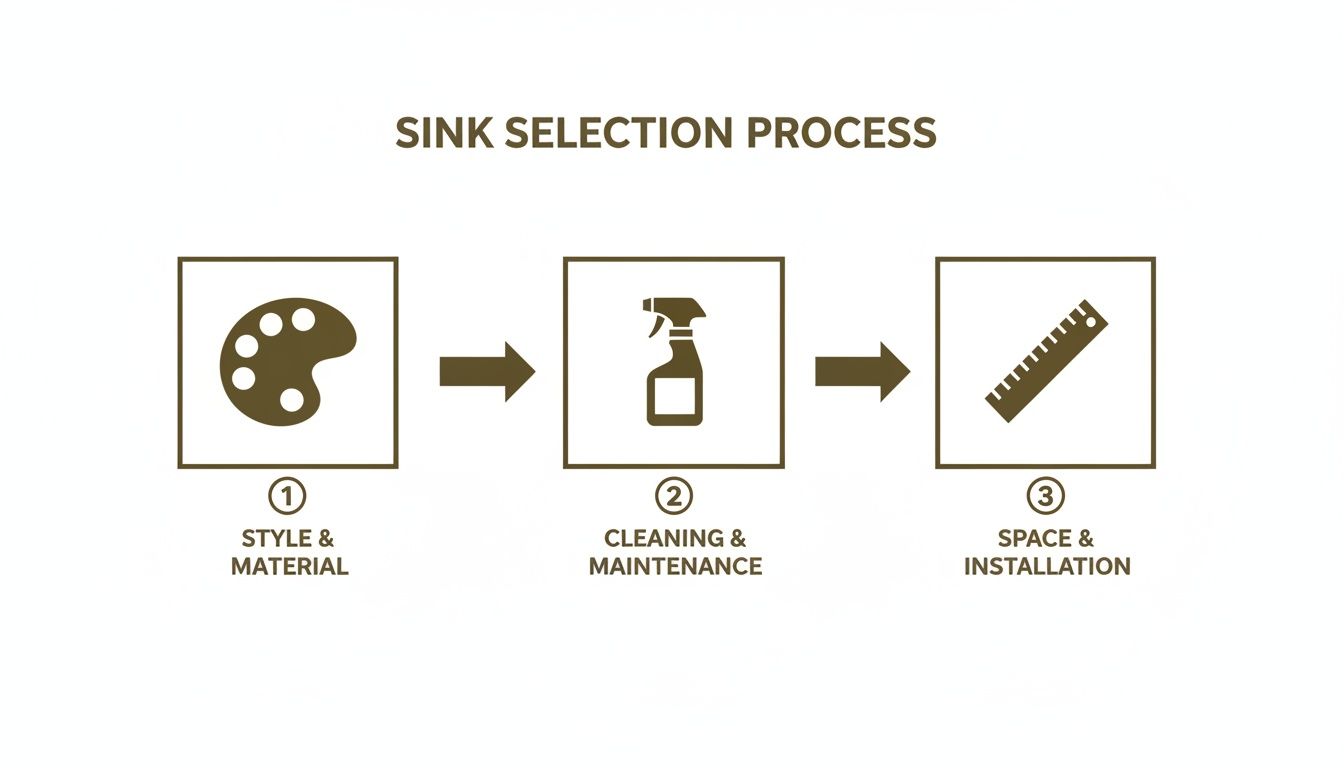
As you can see, thinking about maintenance and space planning from the beginning is just as important as falling in love with a particular style.
Faucet Compatibility
Because your sink sits on top of the counter, a standard-issue bathroom faucet is going to be way too short. You have two main routes to go here:
- Tall Vessel Faucets: These are your go-to solution. They're deck-mounted faucets specifically designed with an elongated body that gracefully arcs over the sink's rim. When you're shopping, pay close attention to the specs—you need to check both its height and its reach. The water stream should aim for the drain, not the sides of the bowl, to keep splashing to a minimum.
- Wall-Mounted Faucets: Installed directly into the wall behind the sink, these faucets offer a super clean, minimalist aesthetic. Be warned, though: this option requires serious forethought. The plumbing has to be roughed in before the drywall and tile go up, making it a much bigger commitment.
Drain Selection
Last but not least, you need the right drain. Vessel sinks come in two flavors: with or without an overflow. That's the small hole near the rim designed to prevent a potential flood. Your drain must match your sink.
- Sinks With an Overflow: These need a drain that has a little opening in the side to connect to the sink's overflow channel.
- Sinks Without an Overflow: For these, you'll need a drain that is solid on the sides to create a perfect seal.
Getting these details right is what makes an installation seamless, preventing leaks and other headaches down the road. A little planning around these three core elements—height, faucet, and drain—is all it takes to guarantee a successful and stunning result.
How to Care for Your Vessel Sink
So you’ve got this beautiful statement sink. How do you keep it looking that way? The good news is, it's easier than you might think. A few simple, daily habits are really all you need to keep that just-installed shine, no matter what material you chose.
The single most important thing you can do is a quick wipe-down after each use. This prevents hard water spots and soap scum from building up, which can slowly dull or even etch the finish over time.
For this daily wipe, a soft microfiber cloth and a gentle, pH-neutral cleaner are your best friends. Absolutely avoid harsh scrubbing pads or powdered cleansers—they’ll create tiny scratches that eventually ruin the sink's luster. Think of it less like scrubbing a utility sink and more like dusting a fine piece of furniture. Gentle care is key.
Material-Specific Maintenance Strategies
While a daily wipe is the golden rule for all vessel sinks, different materials do have their own quirks. Fine-tuning your cleaning routine to your sink’s specific material will go a long way in preserving its beauty and character for years.
Here’s a quick guide for the most common materials:
- Glass Sinks: To keep that brilliant, streak-free clarity, a standard glass cleaner or a simple mix of vinegar and water works perfectly. This will cut right through any film from soap or toothpaste. Just remember, never use abrasive cleaners. Scratches on glass are impossible to hide and a real pain to fix.
- Natural Stone Sinks: Materials like marble, travertine, or onyx are naturally porous. This means they need to be sealed—usually about once a year—to stop stains from setting in. For cleaning, stick with a pH-neutral cleaner designed specifically for stone. Anything acidic, like lemon juice or even some common bathroom cleaners, can permanently etch and damage the surface.
- Copper Sinks: Part of the charm of a copper sink is the beautiful patina it develops with age. To clean it, all you need is mild soap and water, followed by a thorough drying. If you prefer to keep it bright and shiny, you can apply a special copper wax. Honestly, though, most people let it age naturally to bring out that warm, rustic character.
Here’s a pro tip: Don't forget the small seam where the base of the sink sits on the countertop. It’s a magnet for dust and moisture. Giving that little crevice a quick wipe when you clean the sink keeps the whole installation looking sharp and tidy.
Follow these straightforward tips, and your vessel sink won't just be a functional part of your bathroom—it will remain a stunning centerpiece for a long, long time.
Finding the Perfect Fixtures for Your Project
So, you've picked out a beautiful vessel sink. What's next? The final, and arguably most important, step is choosing the right hardware to go with it. This isn't just about looks; a well-chosen faucet is the difference between a stunning bathroom and a daily frustration.
For anyone bringing a bathroom vision to life, the goal is to find high-quality fixtures specifically designed for a vessel sink setup. Look for an extensive range of cUPC-certified vessel faucets. That certification isn't just jargon—it's your assurance that the faucet meets strict North American standards for safety and performance, a non-negotiable for both homeowners and professional installers.
Choosing Faucets with Confidence
When you're browsing for a faucet, the material really matters. Solid brass, for instance, is a fantastic choice because it's built to last and can easily handle the daily wear and tear of a busy bathroom. It's also engineered to match the unique height and scale of a vessel sink, ensuring the water flow is just right.
A great design is only as good as the components that bring it to life. Investing in certified, well-made fixtures is the surest way to protect your investment and enjoy your new bathroom without issues for years to come.
To take the guesswork out of it, brands that offer a curated collection of fixtures that tick all these boxes can be a great resource. Focus on durability, limited lifetime warranties, and clear installation resources. This gives you the confidence to install beautiful, reliable hardware that completes your luxury bathroom design.
Answering Your Top Questions About Vessel Sinks
As you get closer to finalizing your bathroom design, you might have a few lingering questions about how a vessel sink will work in real life. It's completely normal. Getting these questions answered is the final step before you can commit with confidence. Let's tackle some of the most common ones we hear from homeowners.
Are Vessel Sinks Just a Trend?
It’s a fair question, but no, they've proven their staying power. While vessel sinks had a huge surge in popularity a while back, they’ve since settled into a role as a classic, statement-making fixture.
Think about it: the sheer variety available today is staggering. You can find them in everything from rugged natural stone and sleek concrete to intricate hand-painted ceramics. This adaptability means they can anchor almost any design style, from ultra-modern minimalism to a warm, rustic farmhouse look. They’ve successfully made the leap from a hot trend to a timeless design choice.
How Do I Keep a Vessel Sink from Splashing Everywhere?
This is probably the biggest concern we hear, but the fix is surprisingly simple. Splashing is almost always a mismatch between the faucet and the sink, not an issue with the sink itself. The solution is choosing the right faucet from the get-go.
The trick is to get the proportions right. You need a faucet spout that’s tall enough to clear the rim of the sink comfortably but aims the water stream down toward the drain, not at the angled sides. Faucets with a good aerator are also a game-changer, as they soften the water flow and dramatically cut down on splash-back.
What's the Right Vanity Height for a Vessel Sink?
Getting the height right is all about ergonomics. You want the top rim of the sink to land at the same height as a standard countertop, which is typically between 34 and 36 inches off the floor.
To figure out your ideal vanity height, just do a little math. Subtract the height of your vessel sink from your desired final rim height.
For instance, if your sink is 5 inches tall and you want the rim to be at a comfortable 36 inches, you'll need a vanity that stands 31 inches tall. This simple formula ensures your sink is at a comfortable height for everyday use by most adults.
Ready to bring your vision to life with the perfect hardware? You can find a collection of cUPC-certified vessel faucets and accessories built for impeccable performance and style that lasts. Take a look at available collections and discover the ideal finishing touches for your project at Grandjoy Vessel Sink Faucets.


Leave a comment
This site is protected by hCaptcha and the hCaptcha Privacy Policy and Terms of Service apply.